Dewa Sanzan official temple visit route

- Suggested Time
- 3 days / 2 nights
- Transport Options
- Walk
This is the official temple visit route for the three mountains of Dewa Sanzan (Mount Haguro, Mount Gassan, and Mount Yudono).
*Climbing equipment is needed for Mount Gassan and Mount Yudono.
*Mountain opening period: Mount Gassan: July 1 - August 31, Mount Yudono: May 1 - early November.
START
Day1
40 minutes
Mt. Haguro
The sacred mountain of cedar trees awarded three stars in the Michelin Green Guide
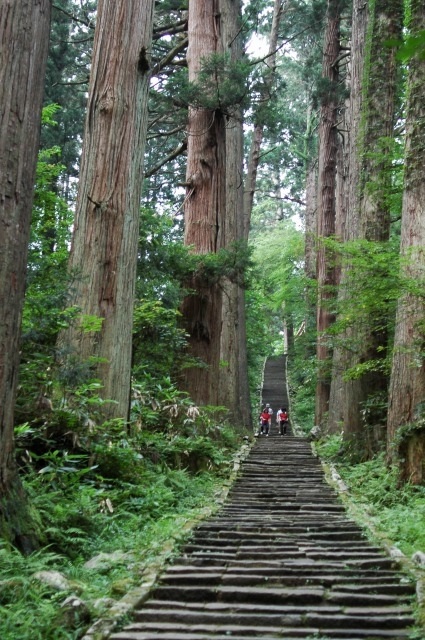


Mount Haguro, Mount Gassan and Mount Yudono, known as the Three Mountains of Dewa, have been revered as sacred mountains for hundreds of years. Travelling to these three mountains is said to be a journey of reincarnation as believers pray for the present on Mount Haguro, for the past on Mount Gassan and for the future on Mount Yudono. A popular proverb goes “a western pilgrimage to Ise Shrine and an eastern pilgrimage to the Three Mountains of Dewa”, and these mountains are a well-known destination for a once in a lifetime visit. The 1.7-kilometre walking route of Mount Haguro takes one hour from Zuishinmon Gate to Sanjingosaiden Shrine.
The row of cedar trees along the route from Zuishinmon Gate to the top of the mountain has been awarded three stars in the Michelin Green Guide. After crossing the vermillion Shinkyo Bridge a five-storey pagoda rises within the row of massive cedar trees, some of which are a thousand years old and known as “Jijisugi”. This is a popular location for photos as it combines two officially recognised sites – the pagoda, a national treasure, and the massive cedar trees, an official natural monument. The illuminated view of the pagoda surrounded by the cedar trees at night is fantastic during summer.
The following 2,446 stone steps up the mountain are a challenge that is well-rewarded. Look out for the 33 carved pictures of the three slopes on the steps, spot them all and your wish will come true! At the end of the second slope, the Ninosaka Chaya teahouse is the perfect place for a refreshment with the famous Chikara-mochi (‘great strength’ rice cakes) while enjoying the splendid view of the Shonai plains. Continuing up the third slope to the red gateway, the goal is a visit to Sanjingosaiden Shrine enshrining gods of the three mountains of Dewa. The magnificent views from the top of the mountain, not to mention the sense of achievement, are well worth the effort!
Zuishin-mon


10 minutes
1 hour
Mt.Haguro- Dewasanzan Sanjin Gosaiden


5 minutes
Stay one night in Hagurosan Saikan


Day2
1 hour
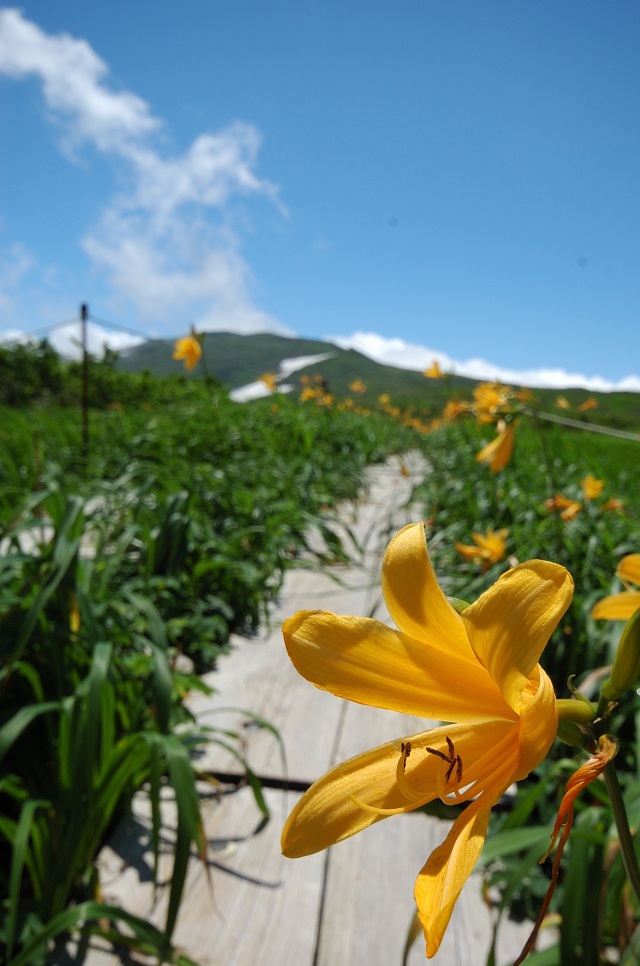
Midagahara Wetlands


3 hour
Gassan Shrine


2 hour and 30 minutes
Stay one night in Yudonoyama Sanrojo


Day3
30 minutes
Yudonosan Shrine
This mysterious sacred location is the last stop of the Three Mountains of Dewa


Mount Haguro, Mount Gassan and Mount Yudono, known as the Three Mountains of Dewa, have been revered as sacred mountains for hundreds of years. Travelling to these three mountains is said to be a journey of reincarnation as believers pray for the present on Mount Haguro, for the past on Mount Gassan and for the future on Mount Yudono. A popular proverb goes “a western pilgrimage to Ise Shrine and an eastern pilgrimage to the Three Mountains of Dewa”, and these mountains are a well-known destination for a once in a lifetime visit.
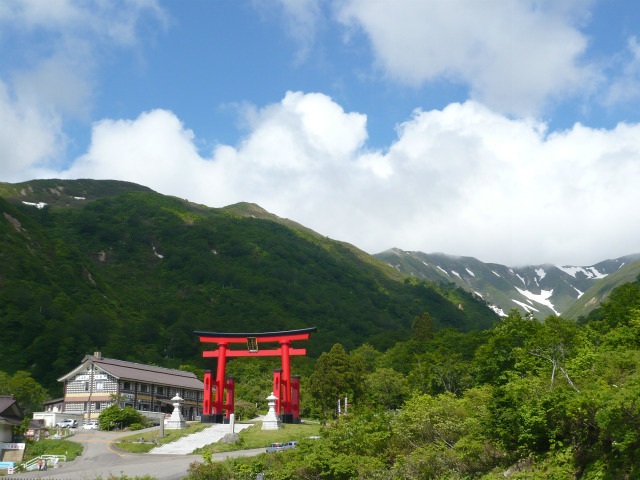
Mount Yudono is the final destination of the pilgrimage where mountain priests come for ascetic Zen practices after performing austere rituals in Mount Gassan and Mount Haguro. As a particularly sacred location there are a number of regulations visitors must observe when visiting Yudonosan Shrine. Photography is not allowed and in order to preserve the shrine’s mystery visitors are prohibited from talking about what they see and hear inside its precincts. The wearing of shoes is not allowed on the shrine’s grounds as the area is regarded as a sacred place separate from the outside world. The barefoot walk along the approach to the shrine gives visitors a feel for the earth’s energy.
There is no main shrine building, instead the object of worship here is a massive ginger-coloured rock spouting hot water. After purifying themselves at the shrine entrance, visitors are finally allowed to face the sacred rock to pray.
Meanwhile, Mount Yudono is known as a lucky location for matchmaking and is nicknamed “the Mountain of Lovers”. Unique good luck charms for romance popular with local women are available from the shrine.
Yudonosan Sanrojo beside the shrine’s main gate offers accommodation with hot spring facilities (reservations are required), day visits are also available. Note that visitors need to make a bow to the altar at the bathhouse before taking a bath!
Taxi
1 hour and 15 minutes
GOAL

